
From psychological horror to frustrating yet rewarding platformers, games made by independent developers, also known as indie games, are taking the community by storm and revitalizing the indie gaming scene.
Over the past few years, attention in the online gaming community has shifted to indie games. Dozens of notable indie games have come out in the past year, some with bigger impacts than others. Three particularly influential titles — “Mouthwashing,” “No, I’m Not a Human,” and “Hollow Knight: Silksong” — have shaken the community and earned their place in the hearts of players.
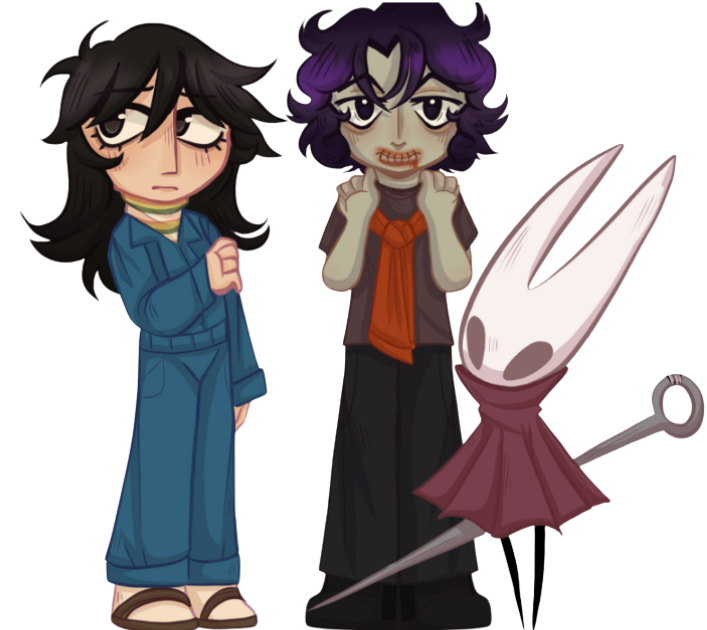
“Mouthwashing” by developer Wrong Organ was actually released in late 2024, but didn’t gain traction in the community until early 2025. “Mouthwashing” is a horror game that tells the story of the crew of a long-haul space freighter after their shipment is halted by a crash. It is a heavily character-focused game, driven by the interactions between the crew, and has very little actual gameplay, yet it became one of the biggest gaming sensations of the year due to how compelling the story being told was.
With an estimated 607 thousand copies sold, “Mouthwashing” likely made around $6.5 million, an exceptional amount for a game by such a small developer. It also won numerous awards, including Best Story Game at the Steam Awards, and amassed a huge fanbase, mostly concentrated on TikTok. Discussion of the game was practically unavoidable, with fanart of the crew everywhere. Although the constant stream of content has fizzled since the game’s peak popularity, the effects of the cultural phenomenon it became still linger.
On top of the success of the game itself, horror games in general have seen a spike in popularity since the success of “Mouthwashing.”
“No, I’m Not a Human” by Trioskaz is one such game, being released by the same publisher as “Mouthwashing,” Critical Reflex. The game places the player in an apocalyptic world in which the sun has heated up so much that it’s no longer safe to be outside during the day, and human-imitating monsters called visitors have emerged to try and kill the humans. The player’s job is to deduce whether individuals who approach their door are humans or visitors. If you don’t allow anyone to enter, the main villain, an entity called the pale visitor, will appear and kill the player. If you allow a visitor in, it will kill off your human houseguests. This leads to a balancing act between allowing enough people in to protect yourself, but not allowing the visitors in.
Although the game is a recent release, coming out on Sept. 15, 2025, it quickly became a new favorite among horror game fans. Analyses of the game’s intended message ran rampant, and fanworks were just as prevalent in the wake of this game as they were “Mouthwashing.”
Perhaps the most culturally significant of these releases is “Hollow Knight: Silksong,” the greatly anticipated sequel to the 2017 phenomenon that was the original “Hollow Knight.” Nearly five million people wishlisted “Silksong” before its release on Sept. 4, making it the most wishlisted game on the platform in 2025. When it was released, Steam, the largest PC gaming distributor in the world, crashed multiple times due to the sheer number of people downloading it at once.
It is estimated that 4.6 million people have purchased the game, bringing the revenue up to around $75 million, cementing itself as one of the most popular games of 2025, even above releases by large companies like Nintendo.
The game follows Hornet, sister of the Knight from the prior game, as she traverses through a world full of insects. As opposed to the other games discussed, “Silksong” is very combat-heavy, focused mostly on skill-based challenges. Upon release, the game received criticism due to some individuals believing the game had clunky controls, but overall, reviews were positive.
Despite the game itself not being a new release, the overwhelming success of chapters three and four of “Deltarune” is also worth noting. Developer Toby Fox’s success is a testament to how far indie gaming has come. “Deltarune” started as a mere passion project by a one-hit-wonder developer, but has since worked its way up to becoming a Nintendo Switch 2 release title. On Steam alone, not counting sales by Nintendo, the game sold around 1.2 million copies and made $27.8 million.
Some of this success can be attributed to the rise of content creators providing free promotion to games through their work, drawing attention to them in ways advertisements are unable to. This impact is so significant that the Game of the Year awards bestow an award for best gaming content creator, acknowledging the effect these creators have on the popularity and success of a game.
Indie games currently have just as much of an impact on the online gaming community as large-scale releases. These games spark immense quantities of discussion, fanwork, and other content, ultimately becoming a self-perpetuating cycle in which word-of-mouth promotes small games to the point their sales are comparable to those of recent games by massive companies. While this is a recent development, the space created by fans of these games is a worthwhile addition to the community.