
This was previously published in our December 2025 issue.
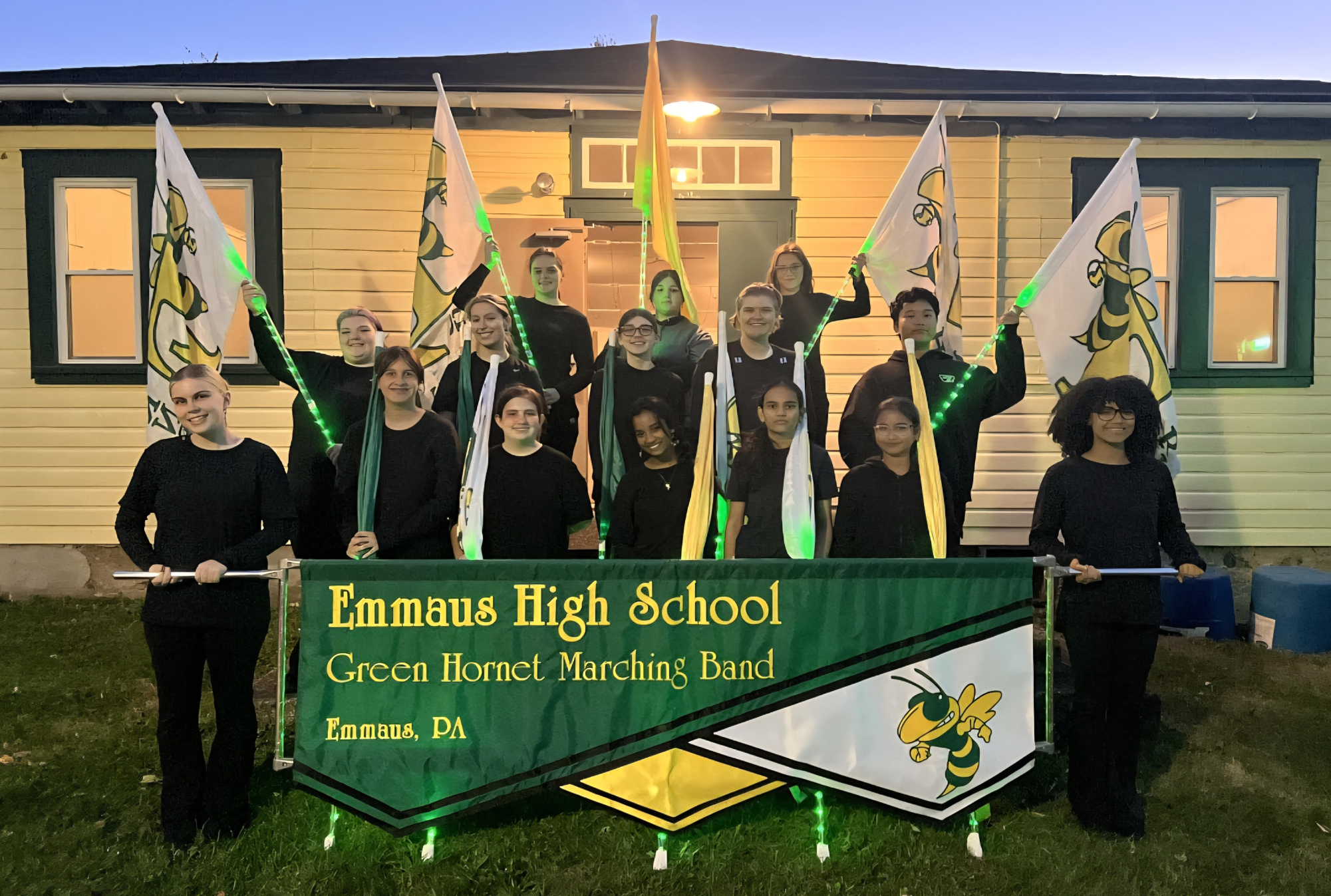
The marching band marches out onto the field in their unified outfits and instruments in hand. They are ready to play their hearts out to show their musical talents and win the hearts of the crowd. However, a part of the marching band is not like the rest. Their costumes shimmer in the stadium lights. They don’t carry instruments; instead they carry colorful flags. The color guard team starts the show and tosses their beautiful flags into the air.
Though, no one seems to pay them any mind, the dedication these performers have is like no other, yet they are continuously overlooked by the end of the Emmaus High School Marching Band performance. I believe the color guard to be unappreciated compared to other extracurriculars at EHS.
Color guard origin began from military identification, but evolved into spectacular performances mainly from high school teams. A typical color guard routine will include choreographed dancing, the use of different props (flags, rifles, sabers), and uniquely interpreted music.
Similar to other performing arts, their dances could be fun and colorful, or deep and somber. Color guard is exciting, but it’s also serious. For professional competitions, they are fierce just like any other sport.
For many color guard teams, there are national competitions to win for their talents. At EHS, our color guard team competes during a separate winter season from the Marching Band; yet, there are no announcements made for any of their accomplishments. Even if they may not win, they represent EHS every time they perform and should merit good luck from their school.
Junior Maya Albright voices her frustration with this issue. Albright has been a member of color guard for two years and has very rarely heard any recognition for the team.
“If other teams can get announced on the speakers, why can’t we? We should be getting mentioned too,” Albright said.
The source of the problem is color guard is technically classified as an extracurricular activity instead of a sport. It’s true that clubs do typically compete just like color guard; however, the commitment and physical labor required is greater than a typical club.
“Start classifying it [color guard] as a sport instead of just a club,” junior Benthany Alt said. “People don’t respect it as much because they don’t see it as a sport, but it is a lot of hard work.”
Color guard is usually associated with marching band as one unit, instead of their own two separate entities. This structuring eliminates all the work the color guard does on their own, which undermines the dedication of the members. I have no doubt the EHS color guard could be even stronger if the community comes to appreciate the commitment and talent these students have. Football isn’t the only sport the stadium should cheer on.
Additional reporting by Emily Grabinski.