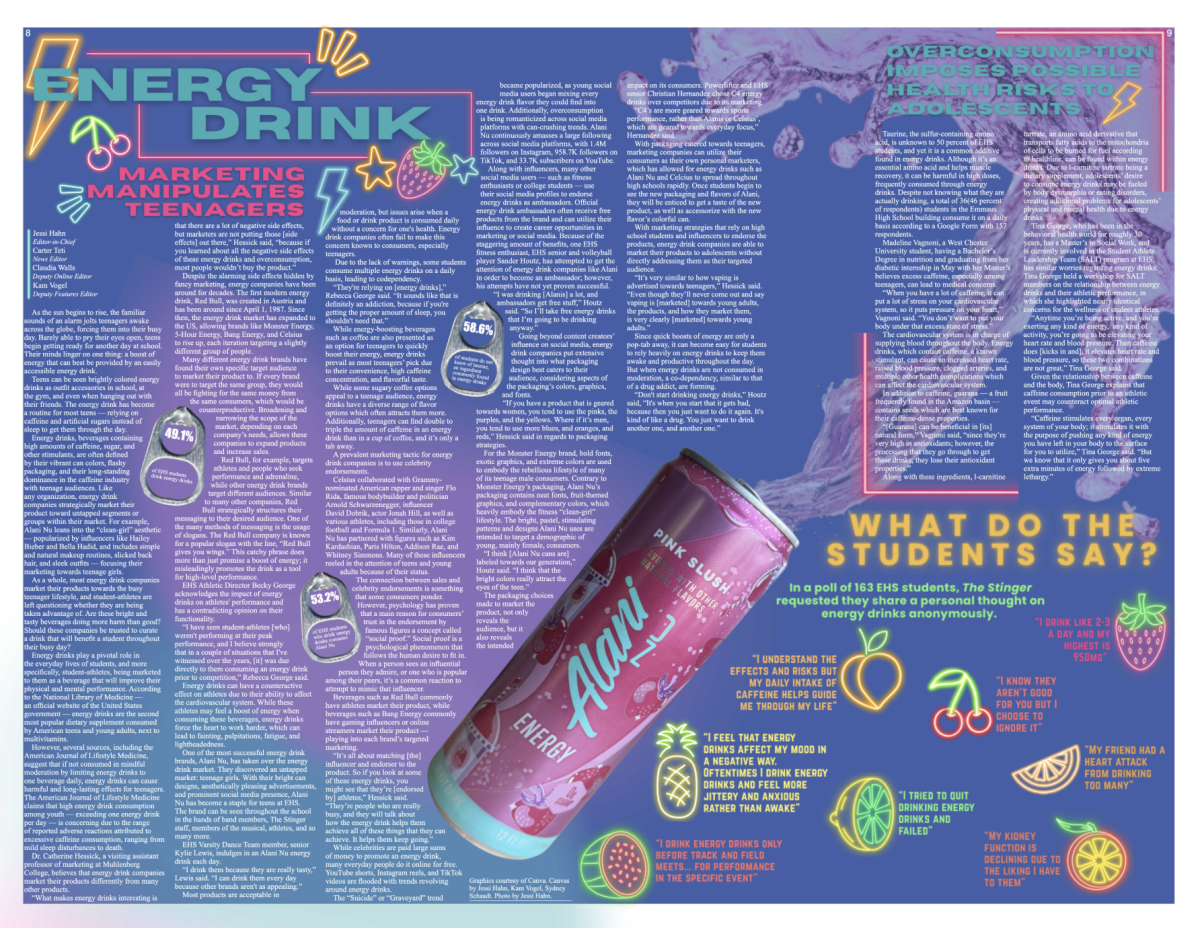
Taurine, the sulfur-containing amino acid, is unknown to 50 percent of EHS students, and yet it is a common additive found in energy drinks. Although it’s an essential amino acid and helps muscle recovery, it can be harmful in high doses, frequently consumed through energy drinks. Despite not knowing what they are actually drinking, a total of 36(46 percent of respondents) students in the Emmaus High School building consume it on a daily basis according to a Google Form with 157 respondents.
Madeline Vagnoni, a West Chester University student, having a Bachelor’s Degree in nutrition and graduating from her diabetic internship in May with her Master’s believes excess caffeine, especially among teenagers, can lead to medical concerns.
“When you have a lot of caffeine, it can put a lot of stress on your cardiovascular system, so it puts pressure on your heart,” Vagnoni said. “You don’t want to put your body under that excess state of stress.”
The cardiovascular system is in charge of supplying blood throughout the body. Energy drinks, which contain caffeine, a known stimulant, can cause an increased heart rate, raised blood pressure, clogged arteries, and multiple other health complications which can affect the cardiovascular system.
In addition to caffeine, guarana — a fruit frequently found in the Amazon basin — contains seeds which are best known for their caffeine-dense properties.
“[Guarana] can be beneficial in [its] natural form,” Vagnoni said, “since they’re very high in antioxidants; however, the processing that they go through to get these drinks, they lose their antioxidant properties.”
Along with these ingredients, l-carnitine tartrate, an amino acid derivative that transports fatty acids to the mitochondria of cells to be burned for fuel according to healthline, can be found within energy drinks. Due to l-carnitine tartrate being a dietary supplement, adolescents’ desire to consume energy drinks may be fueled by body dysmorphia or eating disorders, creating additional problems for adolescents’ physical and mental health due to energy drinks.
Tina George, who has been in the behavioral health world for roughly 30 years, has a Master’s in Social Work, and is currently involved in the Student Athlete Leadership Team (SALT) program at EHS, has similar worries regarding energy drinks. Tina George held a workshop for SALT members on the relationship between energy drinks and their athletic performance, in which she highlighted nearly identical concerns for the wellness of student athletes.
“Anytime you’re being active, and you’re exerting any kind of energy, any kind of activity, you’re going to be elevating your heart rate and blood pressure. Then caffeine does [kicks in and], it elevates heart rate and blood pressure, so these two combinations are not great,” Tina George said.
Given the relationship between caffeine and the body, Tina George explains that caffeine consumption prior to an athletic event may counteract optimal athletic performance.
“Caffeine stimulates every organ, every system of your body; it stimulates it with the purpose of pushing any kind of energy you have left in your body to the surface for you to utilize,” Tina George said. “But we know that it only gives you about five extra minutes of energy followed by extreme lethargy.”