The following article is for educational purposes.
The following article is a follow up to “Equality, safety, and science: issues surrounding
transgender athletes in women’s sports” from The Stinger Sept. 2025 issue.
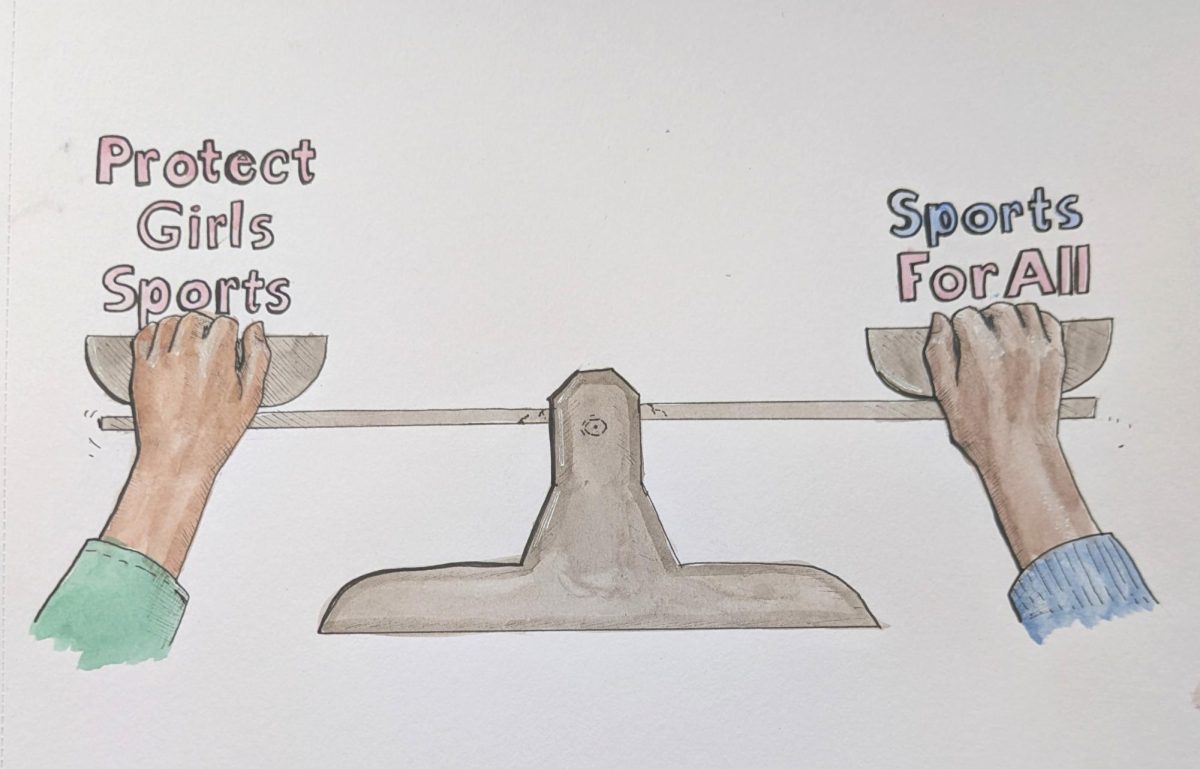
President Donald J. Trump signed “Keeping Men Out of Women’s Sports” on Feb. 5, 2025 under the impression that the turmoil surrounding transgender athletes in women’s sports would cease. Now it’s 2026, and that turmoil has done nothing but boil.
This order was preceded by the signing of “Defending Women from Gender Ideology Extremism and Restoring Biological Truth to the Federal Government” on Jan. 20, 2025 by President Trump, which stated that one’s gender can not be determined by gender ideology, but must align with their birth sex. Both orders had clear intentions: keep transgender athletes, more specifically trans women athletes, out of women’s sports. So why is this still an issue?
The order signed in Feb. of 2025 put a ban on trans women athletes participation in sports at a federal (college) level. Many people were quick to jump in with their own view points, either agreeing or disagreeing with the order. Several states upheld the ban, and either tightened their previous restrictions on trans women athletes in women’s sports or created new restrictions. The following states that did so are: Alabama, Alaska, Arizona (blocked lower courts), Arkansas, Florida, Georgia, Idaho (blocked lower courts), Indiana, Iowa, Kansas, Kentucky, Louisiana, Mississippi, Missouri, Montana (blocked lower courts), Nebraska, New Hampshire, North Carolina, North Dakota, Ohio, Oklahoma, South Carolina, South Dakota, Tennessee, Texas, Utah (blocked lower courts), Virginia, West Virginia (blocked lower courts), and Wyoming. Please note this list can change from time of writing to publication.
Two of these states, Idaho and West Virginia, recently have found themselves deep in the turmoil. In both states’ lower courts, the ban on trans women athletes in women’s sports was blocked, but the state has since appealed that and the cases have now made their way to the Supreme Court.
West Virginia attorney general, John McCuskey, along the “Save Women’s Sports Act,” are confident that the West Virginia v. B.P.J. case will go in their favor and the ban on trans women athletes will be upheld.
This case, along with Idaho’s Little v. Hecox, and how the cases are determined are believed to set a precedent for future cases like them and how transgender rights in sports will be legalized. Decisions in these cases are expected by early summer.
In response to the orders passed by President Trump, local changes were seen in Pennsylvania. In Feb. 2025, the Pennsylvania Interscholastic Athletic Association (PIAA) changed its policy to follow the order and many people saw its effects.
Former professional swimmer, Lia Thomas, was stripped of all the previous titles she held at University of Pennsylvania, including her Division I title which she was the first transgender athlete to win. Policies in schools changed from the principal being able to determine an athlete’s “gender” when “questioned or uncertain” to them being able to determine an athlete’s sex” when “questioned or uncertain.” Another thing that came from the order was, the following “schools are required to consult with their school solicitors relative to compliance with the order.”
While feeling the direct effects of both orders and the current tension surrounding the topic of trans women athletes in sports might not be strong now, within the coming months, that feeling is sure to take over. Even a simple comment on this topic is sure to spark and set flame to some of the most controversial and culturally significant conversations to ever surround women’s sports.