This was previously published in our April 2026 issue.

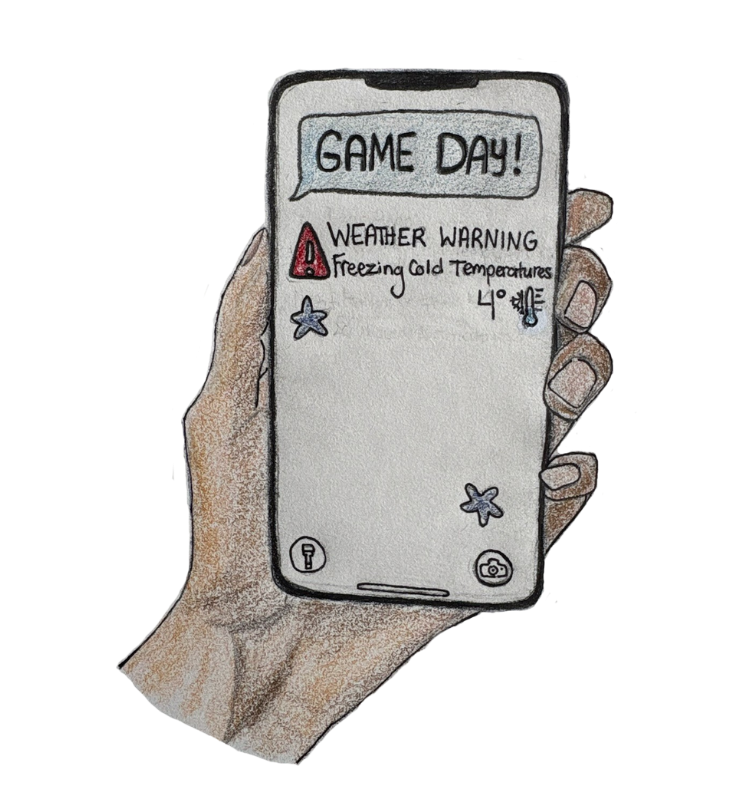
A ding on your phone lights the screen up; it’s a notification from DraftKings about the recent results from your high wager. Nerves wrack through your body as this recent bet you placed could make or break your bank. Your fingers coat your phone with sweat as you open up the addictive app. The results: you lost everything.
All of your savings are gone just like that. The attempt to win back your money from your previous gamble was all for nothing and you’ve just dug a bigger hole for yourself. The worst part is you are 17 years old and that’s all you had. All the grueling hours working for money at the crappy part-time job you had are lost forever to the corporations making millions off young impressionable boys just like you.
In January of 2026, a study by Common Sense Media concluded that “gambling has become common among adolescent boys, with more than a third of boys gambling before they turn 18.”
This issue of teen gambling in young male adolescents has only increased within the recent years. With better access to sports betting apps and the continued rise of social media, gambling is becoming more prevalent among the younger generation. However, this is a problem as gambling can be extremely life altering and leave permanent repercussions on young lives.
Gambling is a form of addiction that acts upon impulsion. While gambling in little amounts will not necessarily cause harm, if one were to rely on the short dopamine of winning a bet, the need to continue betting increases. Betting appeals to younger males as sports is an influential aspect of many of their lives. Still, those who bet are more likely to have severe financial issues, mental and social harm, and may run into some legal issues.
Therefore, the growing prevalence of teen gambling signals a rising problem among today’s generation. Most commonly, adolescents discover gambling through friends, targeted ads, and parents, which can lead to problematic habits.
Sports betting sets unrealistic standards of having infinite amounts of money to gamble because of how they can quickly win or lose, a sentiment Personal Financial Management teacher at Emmaus High School Geoffrey Laird has seen.
“That is the problem with young males today. They continuously think they’re going to hit that big parlay or win that big bet, and then constantly keep losing it before they know it,” Laird said.
Teens finding their way into the world of gambling doesn’t just happen on its own, as sport betting companies do not ease the issue of the rise of young gamblers.
In 2025 and 2026, Draft Kings marketing campaigns included commercials featuring Kevin Hart and Lebron James. Hart and James were both promoting Draft King’s offer of “Bet $5, Get $200”. Major sports betting companies use prominent figures who teenagers are familiar with, to make their apps seem less risky and more appealing.
Celebrity endorsements push the beginnings of a possible addiction to young sports bettors. A well-known face gives the sports betting companies the status that famous figures bring to the table. Their sponsorships entice users to download apps, especially teens who are more susceptible due to their gullible nature and lack of experience.
“It’s so easy these days. It’s online. All you need to do is provide an email, your social security number, your personal information, and you create an account,” Laird said.
In Pennsylvania, minors caught underage gambling can be charged with a misdemeanor or fined up to $10,000, their gambling winnings can be taken away, and parents may be charged for endangering their child’s welfare.
In hopes of preventing the youth from illegal gambling, Pennsylvania passed House Bill 272 (Act 42) in 2017. This law permitted sports betting in Pa. and was legalized in 2018 for both online and in-person sports betting. The one requirement to gamble is the user must be over the age of 21 to participate.
However, the law is easily broken, and underage bettors are finding ways to bet on their favorite sports.
Many young males at Emmaus High School take time out of each day to make small bets that accumulate to them losing more money over periods of time. The quick and easy wagers allows sportsbook apps like FanDuel and DraftKings to capitalize on the growing number of under age gamblers addicted to their apps. These two companies make up only 6.67 percent of the legal sports betting companies that operate in the U.S.
The Gaming Association’s annual report issued on Feb. of 2025 states, “The American sports betting industry posted a record $13.71 billion in 2024 revenue, up from 2023’s record of $11.04 billion.”
These companies continue to capitalize on impressionable minds and grow their revenue through it. The expansion of the sports betting industry is so great that, in fact, one-quarter of men under 30 bet on sports online and 10 percent of young men are problem gamblers, according to a poll conducted by Fairleigh Dickinson University.
“I know almost one-fourth of the school is like me,” John, an Emmaus High School senior who wishes to remain anonymous for legal reasons, said.
The effortless entry on the sportsbook applications also contributes to the escalation of young gamblers. The only real source of identification needed to start is a social security number to cross-reference with credit records to verify age. Yet, this can easily be bypassed by gaining access to a parent’s social security number or using fraudulent information.
Many parents are unaware of this behavior by their children while their own identity is used to enable their child’s gambling addiction. State Gaming commissions regulate legalized gambling, and require sports betting apps to have a strenuous age verification system to prevent illegal gambling.
However, if minors gain access to the app and bypass the verification step by using a stolen identity, sports betting apps don’t implement any more walls for the users to get through. There is no further step of verification for age. Nevertheless, starting an account as an adult is even easier than it is to the younger demographic.
When an adult, specifically a parent, begins to bet on sports, it can create a chain reaction by showing their children that this is a fun and profitable hobby.
The gambling industry is not solely reliant on its young audience and benefits from these parents, as research from Pew Research Center found, “1 in 10 U.S. adults now say they have placed an online sports bet in the past year [2025].”
Adult’s failure to warn the young generation about risks that companies fail to disclose, can cause unhealthy money management and gambling habits. Due to the lack of care from a portion of parents, companies, and lawmakers, the gambling industry is shifting to a younger age demographic; hence, increasing the chances of adolescents picking up the potentially dangerous addiction.
Even so, sports betting mainly appears to the youth through peer influence and marketing strategies seem to entice the younger generation to gamble the most.
Trey Hinkle, a social studies teacher at EHS, entered into the sports betting world during college while watching sports with his friends.
“That’s how I picked it up…just kind of watching games with friends in college. And, one guy does, it’s just kind of a domino effect,” Hinkle said.
For a younger male audience, the unpredictability and competitive nature of sports betting can build close bonds among their friends. Watching sports in itself is very exciting and builds a very commemorative environment that many enjoy being a part of; therefore, adding the element of risk and reward makes watching sports with friends a lot more fun.
“When you’re winning, gambling can be exciting, especially now that you can wager on anything, anytime — even the color of Gatorade poured on a coach or the length of the national anthem,” Child Mind Institute, a nonprofit organization that provides mental health treatment for children, stated.
Nonetheless, it’s not just the excitement of the game that gets young males intrigued in starting to lay odds against sports, but the sportsbook apps themselves seem to not help the susceptible youth move away from using their platforms for what is considered
illegal gambling. Advertisements using celebrity endorsements like Kevin Hart and LeBron James appeal to younger men — influencing them to place bets.
FanDuel, in particular, promotes Charles Barkley, Pat McAfee, and John Cena, who are classic sports icons. Correspondingly, the National Library of Medicine found gambling companies’ specific advertising strategies are influential to those who are younger.
Once these companies get their audience hooked, they have a permanent user for life due to the constant assurance those using their apps will win big eventually. Laird agrees about the continuation of people’s attachment to sports betting apps.
“They [sport betting companies] want the people that bet and lose to continue spending money,” Laird said.
This is especially apparent with the younger age demographic who use sports betting apps for fun or to earn money. However, they are more at risk of developing an addiction because of their underdeveloped brains.
Danielle Walsh, an AP Psychology teacher at EHS, understands the psychology behind teens’ sports betting. More specifically, she believes that age group is susceptible to the reward system that gambling provides.
“Unfortunately, it [the reward system] sets up this cycle in a teen brain where they’re more susceptible to those reward systems that they get from gambling, whether or not they’re winning,” Walsh said.
Excessive gambling also negatively affects mental health among young adults, and more so teens.
Defined by the Addiction Center as “a behavioral disorder characterized by a persistent and uncontrollable desire to bet on sports despite adverse outcomes.
Gambling stimulates the brain’s reward system in a similar way that substances can.”
Like any other addiction, those obsessed with sports betting may start to neglect their responsibilities at home and work, as well as experience withdrawal symptoms such as restlessness or irritability. More significantly, teens and young adults are more likely to go into debt from sports betting, due to the inability to stop when they are losing, a pattern senior Anthony Elias, who only uses sports betting websites for adults 18 and over, has fallen into.
“Well, if I lose a bit of money, I’m like, damn, I really have to make this back. So then I just go all in,” Elias said.
This approach is referred to as gambler’s fallacy, which is the belief that “outcomes of individual events are connected, leading them to make irrational predictions based on previous results,” according to EBSCO Industries, an American company known for its dominant information services.
Essentially, the more one loses, the more they want to win it back because the belief of it being possible is there. This mindset of constantly trying to win back lost money can not only cause financial devastation but also create constant fear and anxiety. Its a system that is designed for someone to not continuously win and lose more money than won.
“People sometimes just don’t take in consideration the randomness of the entire game. There is no payoff,” Walsh said.
Teens immersed in the gambling world are no strangers to the rush of winning a wager. There’s a reason they continue to place bets and try for the ultimate payoff. Elias follows these wins and hopes for greater.
“I think minors should manage their own money, and if they lose it all, then it’s their fault, right?” John said. “If you learn how to manage your money, that would be good, because you need to manage your money later in life.”
John believes sports betting allows children to learn how to manage their money in a way that interests them. They are responsible for their own earnings and feel as if they can spend their money how they want, not how adults may want them to.
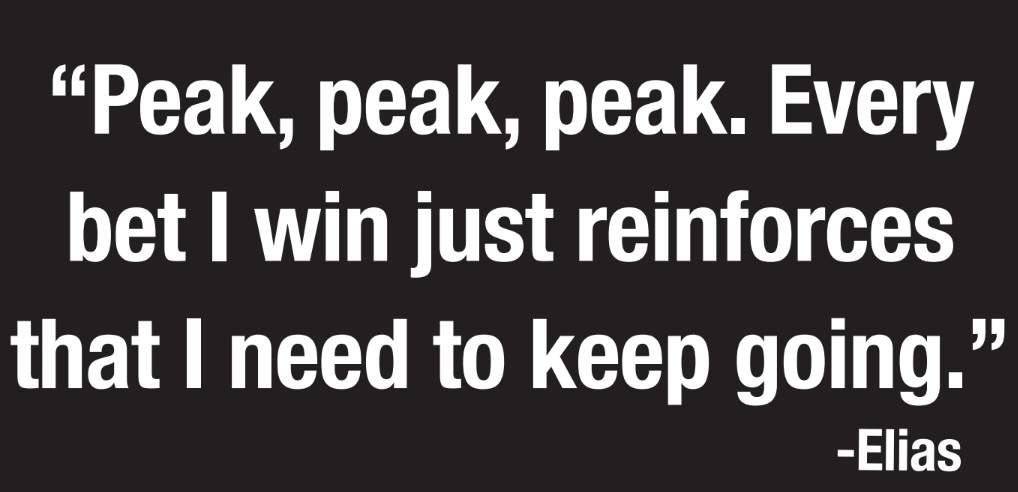
“To me, sports betting is the beautiful release of dopamine, serotonin, oxytocin, and anything else that makes you feel amazing,” Elias said.
Nevertheless, teens continue to believe that if they are invested enough in sports, they will be able to successfully predict trends and sports betting can be done safely and accurately.
Sophomore Max Kern believes that increasing sports research will make bets more responsible.
“You can definitely do this responsibly. If you do enough research, you won’t lose,” Kern believes.
Similarly to many other teenage misconceptions, such as lack of sleep being okay or energy drinks not causing health issues, many still believe that sports betting, whether with real money or not, is a safe and harmless venture. But research may not be enough. Learning and acknowledging when to stop is just as important. If one fails to do so, they may end up in a constant losing loop that ultimately makes them lose more than they win.
“You have to be smart enough to be like, ‘okay, I’ve won so many times in a row. I’m going to lose at some point. So let’s not get carried away with the wager,’” Hinkle said.
According to CBS Sports, it is important not to bet more than one can handle because the loss will be greater than what they can financially handle. Sports betting is dangerous if one becomes too addicted, but like any other hobby or interest, it can be enjoyed if
done so in small amounts at a time.
“If you’re interested, try it out, but don’t get ahead of yourself,” Elias said.
Even so, many young bettors don’t understand all the nuances that come into play when placing a wager, and research may still not be enough to avoid the hands of addiction when continuously setting bets.
Sports betting impacts the younger generation now, and will continue into the future. The lasting effects of the danger of becoming addicted should not be overlooked, especially now, as sports betting platforms aren’t letting up on their advertising nor making age verification tighter. More policies need to pass to protect the young people of the future.
“It’s all chance. It’s all luck. It’s made for you to lose,” Walsh said.