This was previously published in our April 2026 issue.
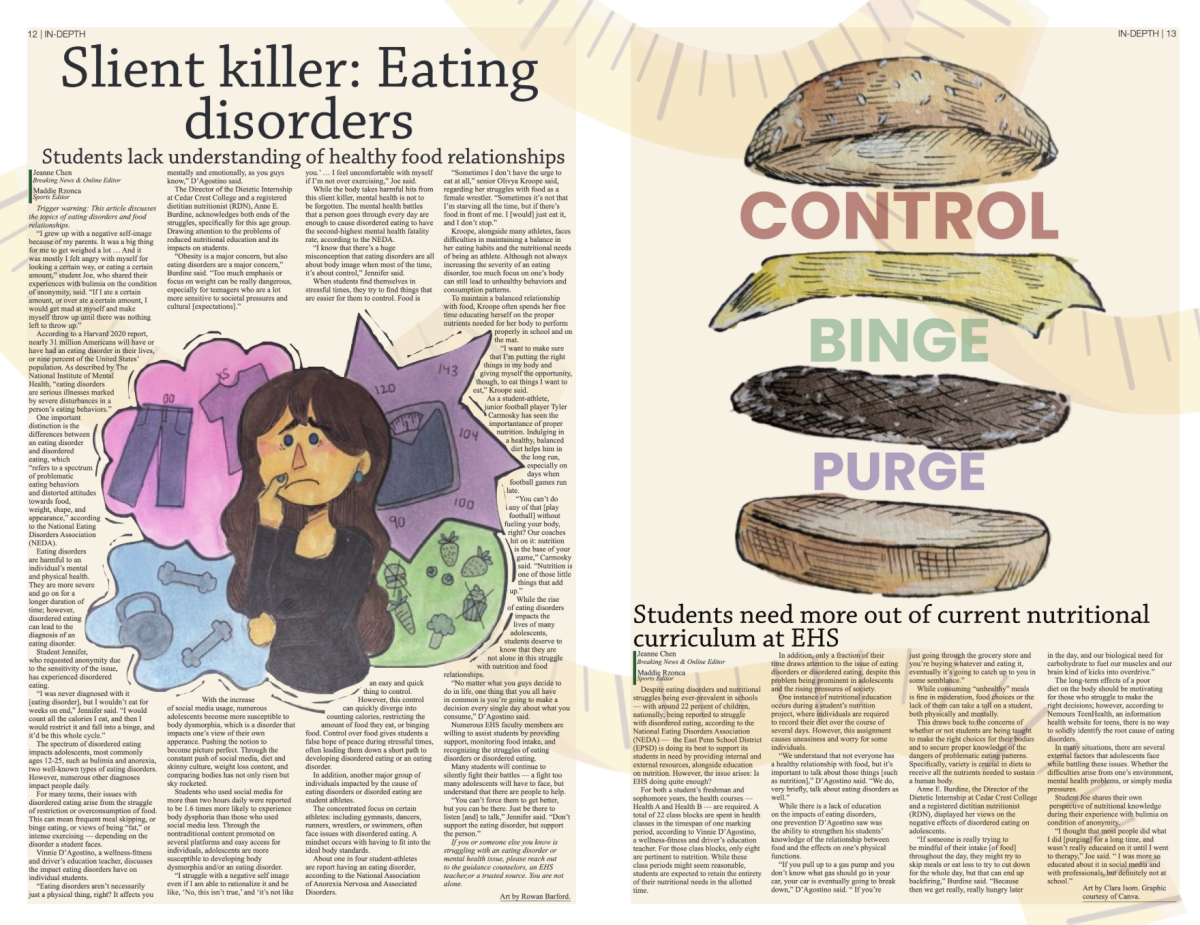
Despite eating disorders and nutritional struggles being ever-prevalent in schools — with around 22 percent of children, nationally, being reported to struggle with disordered eating, according to the National Eating Disorders Association (NEDA) — the East Penn School District (EPSD) is doing its best to support its students in need by providing internal and external resources, alongside education on nutrition. However, the issue arises: Is EHS doing quite enough?
For both a student’s freshman and sophomore years, the health courses — Health A and Health B — are required. A total of 22 class blocks are spent in health classes in the timespan of one marking period, according to Vinnie D’Agostino, a wellness-fitness and driver’s education teacher. For those class blocks, only eight are pertinent to nutrition. While these class periods might seem reasonable, students are expected to retain the entirety of their nutritional needs in the allotted time.
In addition, only a fraction of their time draws attention to the issue of eating disorders or disordered eating, despite this problem being prominent in adolescents and the rising pressures of society.
One instance of nutritional education occurs during a student’s nutrition project, where individuals are required to record their diet over the course of several days. However, this assignment causes uneasiness and worry for some individuals.
“We understand that not everyone has a healthy relationship with food, but it’s important to talk about those things [such as nutrition],” D’Agostino said. “We do, very briefly, talk about eating disorders as well.”
While there is a lack of education on the impacts of eating disorders, one prevention D’Agostino saw was the ability to strengthen his students’ knowledge of the relationship between food and the effects on one’s physical functions.
“If you pull up to a gas pump and you don’t know what gas should go in your car, your car is eventually going to break down,” D’Agostino said. “ If you’re just going through the grocery store and you’re buying whatever and eating it, eventually it’s going to catch up to you in some semblance.”
While consuming “unhealthy” meals is fine in moderation, food choices or the lack of them can take a toll on a student, both physically and mentally. This draws back to the concerns of whether or not students are being taught to make the right choices for their bodies and to secure proper knowledge of the dangers of problematic eating patterns. Specifically, variety is crucial in diets to receive all the nutrients needed to sustain a human body.
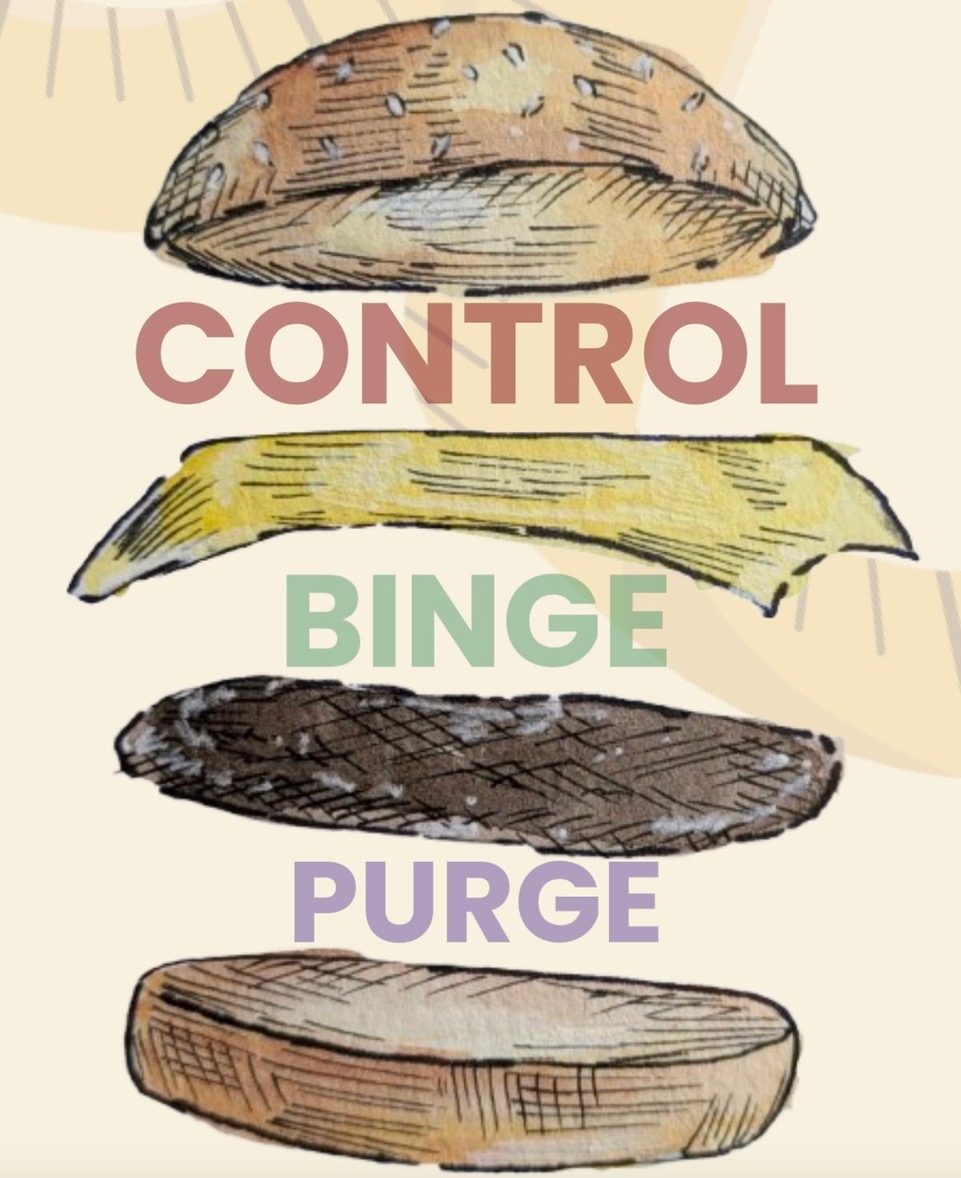
Anne E. Burdine, the Director of the Dietetic Internship at Cedar Crest College and a registered dietitian nutritionist (RDN), displayed her views on the negative effects of disordered eating on adolescents.
“If someone is really trying to be mindful of their intake [of food] throughout the day, they might try to skip meals or eat less to try to cut down for the whole day, but that can end up backfiring,” Burdine said. “Because then we get really, really hungry later in the day, and our biological need for carbohydrate to fuel our muscles and our brain kind of kicks into overdrive.”
The long-term effects of a poor diet on the body should be motivating for those who struggle to make the right decisions; however, according to Nemours TeenHealth, an information health website for teens, there is no way to solidly identify the root cause of eating disorders. In many situations, there are several external factors that adolescents face while battling these issues. Whether the difficulties arise from one’s environment, mental health problems, or simply media pressures.
Student Joe shares their own perspective of nutritional knowledge during their experience with bulimia on condition of anonymity.
“I thought that most people did what I did [purging] for a long time, and wasn’t really educated on it until I went to therapy,” Joe said. “ I was more so educated about it in social media and with professionals, but definitely not at school.”