
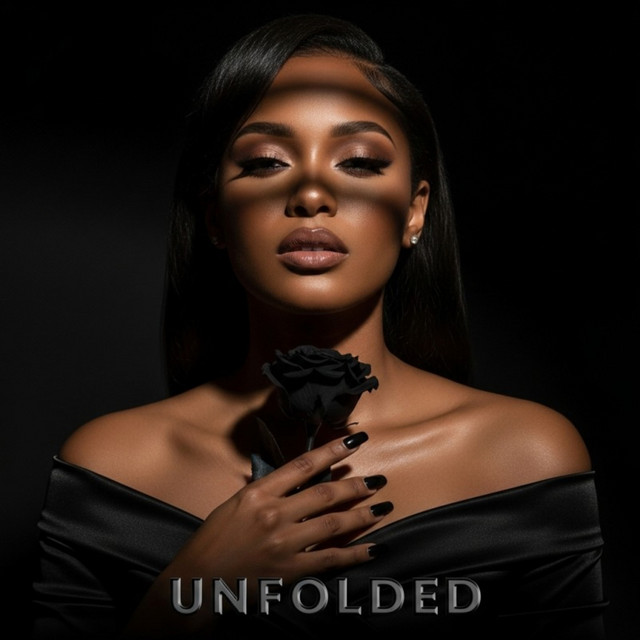
Last summer, a mysterious singer known as Xania Monet appeared on multiple Billboard charts and signed a $3 million record deal soon after in Sept. 2025. This singer caught the attention of the music industry and its listeners. However, her acquisition could lead to either the advancement or corruption of the music industry. Monet is an AI artist. She is not a human.
When this was revealed to listeners, they had quite the negative reaction, and I can’t help but agree with them. Although Monet’s lyrics are written by Telisha Nikki Jones, who is in fact a human, it does not excuse the fact that the use of AI in a purely creative and original community is detrimental. Artists are not only upset but are also worried about the record label’s willingness to support this movement.
Creators who are authentic to themselves and make music because they are passionate about what they sing, play, or write have the ability to connect with their audience. The human element of creativity is what brings out a song’s character and uniqueness. I listen to songs for the comfort and relatability of their lyrics. Songs sung by an artificial device lack meaning and emotion. It is worrisome for a record label to invest millions of dollars into a singer who lives in an app. It is a waste of talent and resources that could be given to a real musician.
Monet isn’t the only AI artist to be successful. The Velvet Sundown mysteriously surfaced and released “Dust on the Wind,” a song that gained 3 million plays on Spotify. People enjoyed the band’s 60s tunes and were led to believe it was produced by real people. This was all a hoax. The creators behind the AI band purposefully mislead media outlets and listeners to believe that they were original artists. Again, this sparked a debate of the role of AI within the music industry. Should individual artists be allowed to create a fake AI singer for the purpose of diversifying their music?
The creative aspect isn’t the only issue. This is a problem because of how deceptive these creators are. Listeners are given no warning that they are listening to AI artists. An AI song can be released with no disclaimer, which can deceive listeners who appreciate art and musical value from a human standpoint. Because this is so new, the laws are unclear as to what a company can and can’t disclose. Information about a musician’s origin is important from an ethical standpoint.
I believe that AI can be used effectively if it is used as a tool rather than an actual artist.
Imogen Heap’s production method is a good example of AI used correctly within the music industry. Heap is well versed on utilizing technology to advance her creative process. Heap creates an artificial harmony using engineered gloves that allow her to control echoes and effects in her vocals. Popular singers like Ariana Grande and FKA twigs have also used this device. Similarly, Heap invented an AI “twin” which helps her layer and manipulate her vocals when producing music. Not only has Heap written and sung her own songs, but she also created the technology herself. She does not use AI to replace her skills and instead uses it to enhance them.
There are so many young artists who have skills and visions beyond what an AI artist can replicate. The goals of efficiency and profit are clouding people’s judgment to create original work. True artists believe that time and passion are what make a song that will not only reach millions but also speak to them.
If big media companies within the music industry continue to allow AI platforms to pass as legitimate artists, it could decrease listeners’ standards and tarnish artists’ work. In 20 years, are we going to be listening to the same quality of music that our parents listened to before AI? Will the legacy of Fleetwood Mac and Pink Floyd be concealed by AI bands that formulated an uncanny rhythm that sounds too similar to theirs? These are things that we need to think about before the issue is normalized.