
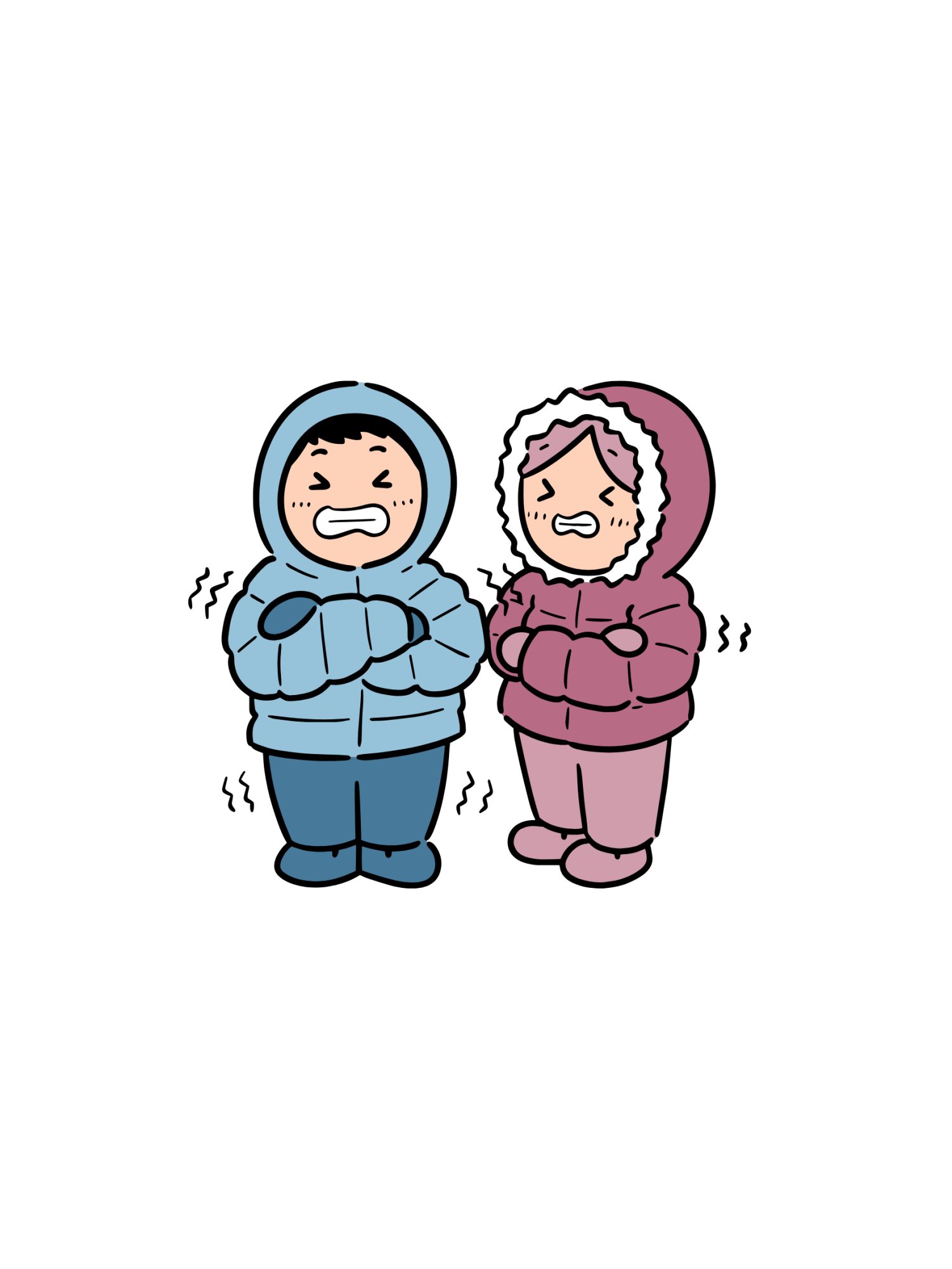
It is four degrees out at 6:45 in the morning, and you’ve barely been awake for 30 minutes. You stand with your hands tucked into the pockets of your thin hoodie as the wind blows right through it. You peek at your phone. Great — it looks like the bus is not going to show up on time today. The kids standing around you aren’t wearing coats either, so your decision to leave yours at home on a below-freezing morning must have been reasonable. Wrong.
First, it is important to understand the science behind why standing outside without a coat can feel so unbearable. In cold environments, the body heat on our skin rushes to keep our internal temperature stable, therefore leaving our skin exposed to the cold. By wearing a coat, you can maintain a regular body temperature. Our body supplies the heat, and coats act as a barrier, trapping the warmth inside, thermalizing our skin. The process is similar to the way the greenhouse effect works. Without having proper protection, cold air can easily penetrate the body, increasing the risk of hypothermia and frostbite. Data from the National Library of Medicine indicates that early stages of hypothermia can begin after just 30 minutes in temperatures below freezing. With recent below-freezing morning temperatures in Emmaus and buses often running late, these situations are very likely. Although cold weather does not directly cause infections, it can weaken the immune system, causing us to be more susceptible to illness. So why has it always been a teenager’s instinct to avoid wearing one, even on the coldest mornings? I believe it is to fit in with the societal norm in an attempt to be “cool.”
You could argue that there are many reasons the majority of students choose not to wear coats: they have nowhere to put them, they do not want to carry them around all day, or they simply don’t own one. While these are all valid reasons, I would like to focus on those who believe it is “socially unacceptable” to wear a coat. Throughout my middle school career, I refused to wear a winter jacket because I was embarrassed. If no one else had one, I felt like the odd man out – awkward and out of place. On cold mornings, I would stand freezing in my hoodie, watching other kids in shorts pace back and forth, trying to stay warm. I would stumble onto the bus and see rows of shivering kids in t-shirts. It seemed we could universally agree that we were freezing, but also that we would never be caught wearing any type of winter attire. So, why?
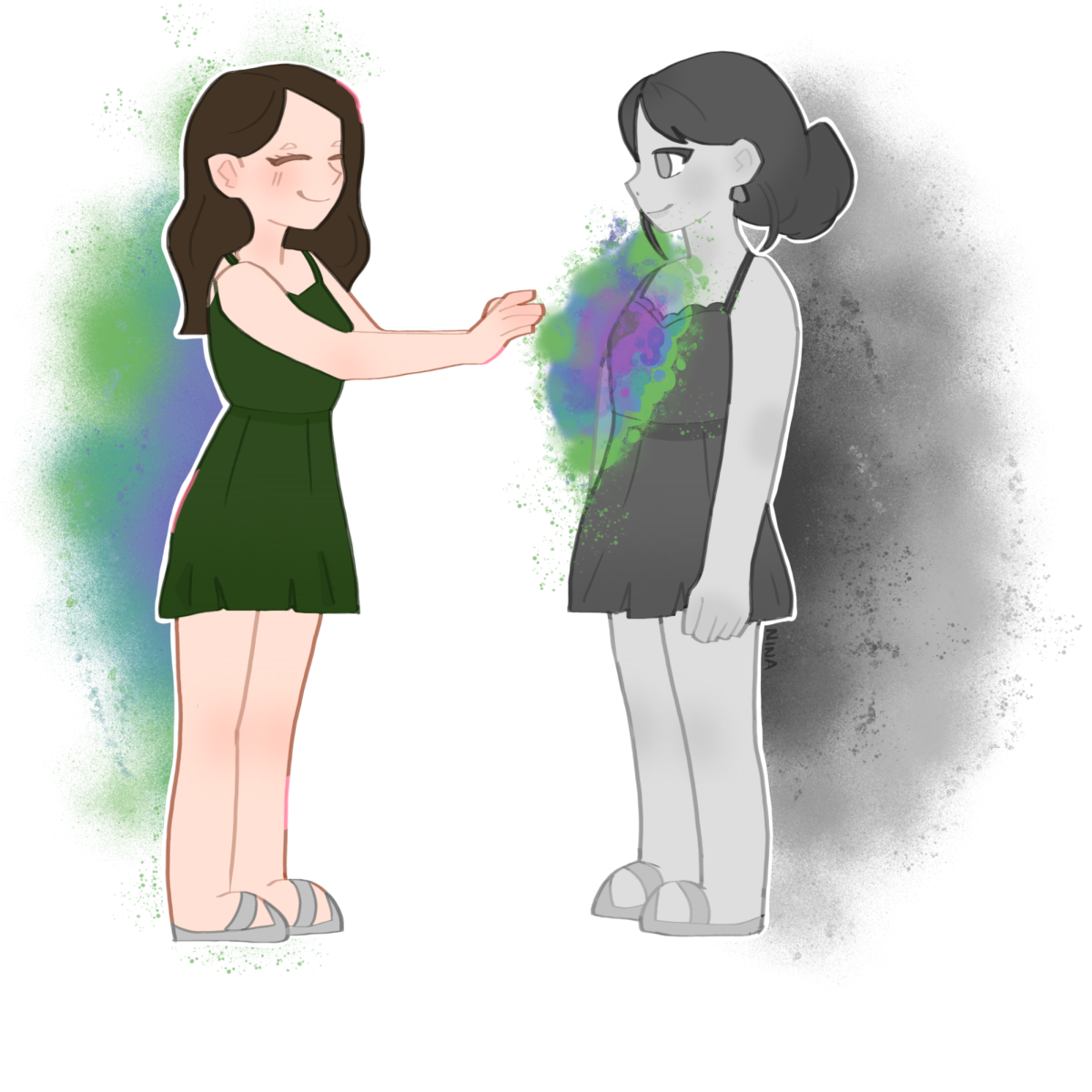
The answer is simple: social pressure. According to a survey administered by Common Sense Media, the Center for Digital Thriving at Harvard Graduate School of Education, and Indiana University, eighty-one percent of teens face societal pressures from peers. This easily explains the ongoing effect that causes kids to be self-conscious about wearing a coat. If the majority of kids refuse to wear one, others won’t either because they feel the need to follow along with their peers. It’s a continuous cycle that isn’t going to stop until we take the step to show each other it is wiser to protect ourselves from harmful conditions than choose to be fashionable.
I am glad to say that I have noticed more people partaking in wearing jackets in my shift to high school, and I hope more teens come to realize the dangers of not wearing proper winter attire. So please, let’s just wear our coats because, to be honest, we all know it’s not “cool” to be cold.