

I have always wanted to take care of people. For as long as I can remember, I tried to help others — even when the help wasn’t always wanted. I used to boss my siblings around, telling them what to do and what not to do. They never appreciated that much, but I just didn’t want anyone to get hurt.
As I got older, I became less bossy, but I still wanted to help those around me.
Almost anywhere I go, I carry around my first-aid kit, overflowing with Band-Aids. Ask any of my friends. To work, to school, to middle school flag football games: I’ve always carried bandages with me. I try my best to carry snacks in my bag, in case anyone suddenly gets hungry. There have been numerous occasions when I forced a remedy on a small bee sting on a coworker’s finger, pestered a friend into resting or eating real food, or requested someone text me after arriving home safely.
These habits have earned me the nickname “mom” among some of my closest friends. Whenever one of them catches me giving someone a bandage or telling someone to wear sunscreen, they always say “you are such a mom!” in an equally affectionate and teasing tone. Some of my more adventurous friends tell me, “Shut up, mom!” when I try to help or protect them from doing something possibly dangerous. I know they all mean well. I always respond with something to the effect of ‘better safe than sorry’ or ‘I just like to be prepared.’
It’s becoming a running joke among my friend group, and I don’t mind when they call me that. I appreciate that, more often than not, they do let me take care of them, despite their protests. They know that my taking care of and loving them is one of the biggest ways that I show that I care. But I don’t think most of them ever question why I truly act the way I do.
“Eldest Child Syndrome” (ECS) is a not-so-affectionate term that a fellow eldest daughter and I coined to describe the constant caregiving. For me, my ECS manifests in the need to make sure that everyone around me is okay. It extends beyond basic human empathy and concern, and instead often becomes an all-consuming quest to solve other people’s problems.
Part of it truly is wanting others to be safe and happy — but more of it stems from anxiety. Fear of being out of control, fear of something going wrong, and a deep-seated discomfort with being powerless to help others in need.
So I overcompensate. I try to anticipate others’ needs and prepare for the worst-case scenario. I dread the day that something happens that I can’t plan for or first-aid kit my way out of. I wish I could figure out why I’m so anxious about things that haven’t even happened. There’s rarely a specific instance or situation that made me fear something happening again. My apprehension solely stems from plain fear.
Another primary symptom of ECS is the crippling fear of being a burden.
All my life, even more prevalent than wanting to take care of others, has been the terrifying phobia of having basic human needs and therefore being a detriment to others. Very few people know about this harmful mindset of mine. The few that I have opened up to about this always respond the same way: they tell me that I am not a burden and that I don’t have to (and cannot) take care of everyone all the time. At least, not without burning myself out in the process. But it’s something I’ve always done, and I’d rather have everyone else be comfortable and me be uncomfortable than the opposite.
To deal with this, I minimize my own needs as much as humanly possible. I try to take up as little room as possible in someone’s headspace. I will say that I’m fine until I physically am unable to say so. Even then, I push it. There have also been numerous occasions where I lied through my teeth and told my friends that I was fine, even as I was actively shaking or visibly fighting off tears. I don’t always tell my friends when something is wrong or when something happens, because I don’t want to worry them.
This has understandably caused some strife within some of my friendships. I’m usually an easy person to read, so my friends often can see right through me. They don’t understand why I don’t want to tell them. I always assure them that it is nothing personal, that it is simply me getting in my own way, but that reason isn’t enough for them. They don’t understand that I have always done this, and how hard it is to override those feelings.
Eldest Child Syndrome has never simply been having responsibility for my younger siblings or facing parental pressure, as it is for many others. For me. In fact, it’s been quite the opposite. I’ve never had excessive responsibility over my sister and brother, nor have my parents ever pressured me. It’s only the weight of the expectations I place on myself. The ever-present, almost suffocating need to micromanage every potential injury or discomfort for everyone around me. The anxiety that something could go wrong, and that I would be helpless.
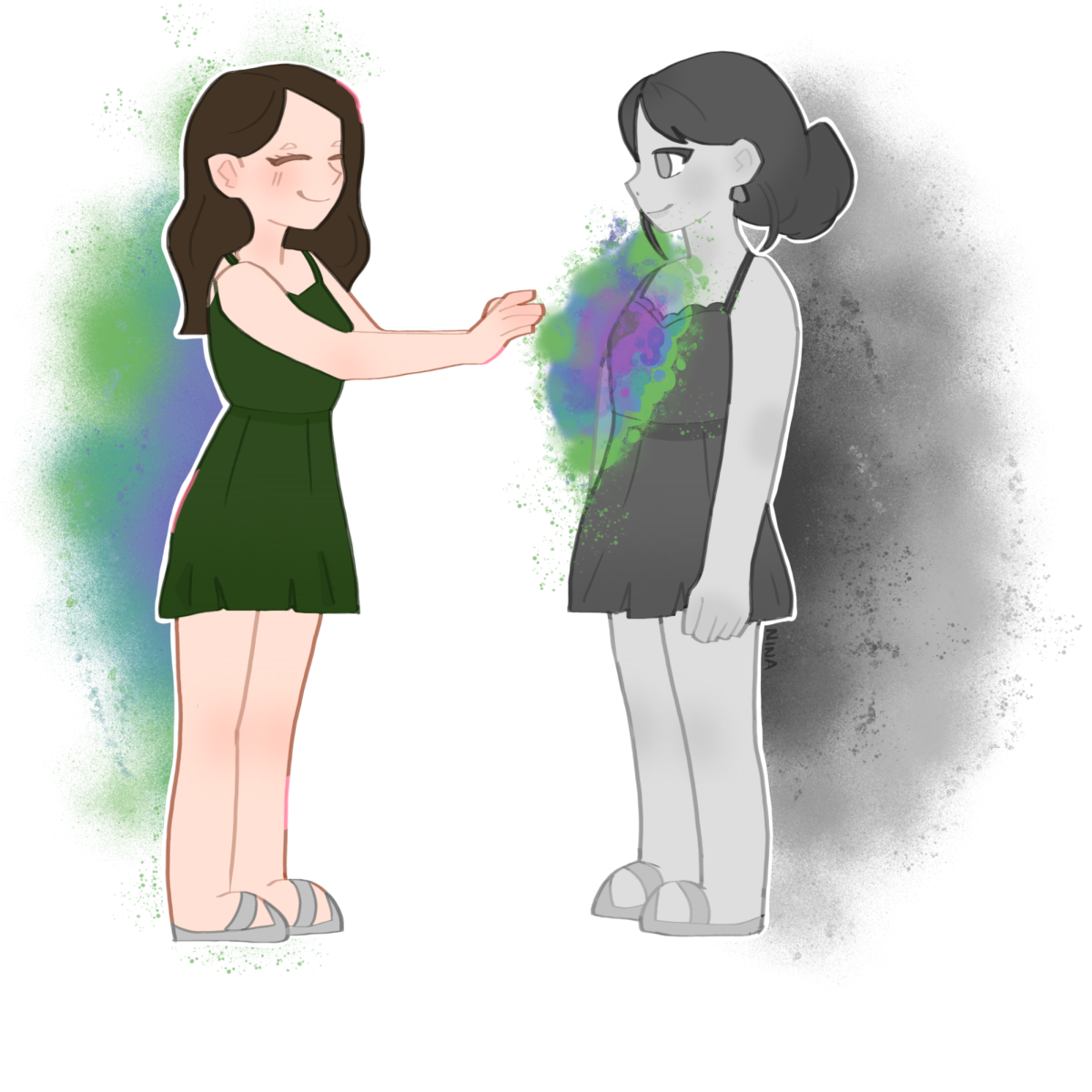
As I’m sure you and any eldest child can imagine, it has not been a fun process to unlearn my patterns and re-learn how to let others care for me. I’ve had to be honest with myself and my friends about when I’m not okay, instead of pushing it down so deep that it doesn’t feel like a real problem. I’ve had to redirect some of my need to care for others to caring for myself, too. After all, you can’t pour from an empty cup.
I’ve had to make a conscious, intentional effort to communicate with my friends since I promised them that I would do better. It has been a slow change, but I’ve gotten better about letting people love me and take care of me. I can’t give care and never allow myself to receive it.
In the wise words of my fellow eldest daughter and close friend, who has helped me step outside of my comfort zone to let people care for me, “[People care for you.] Deal with it.”