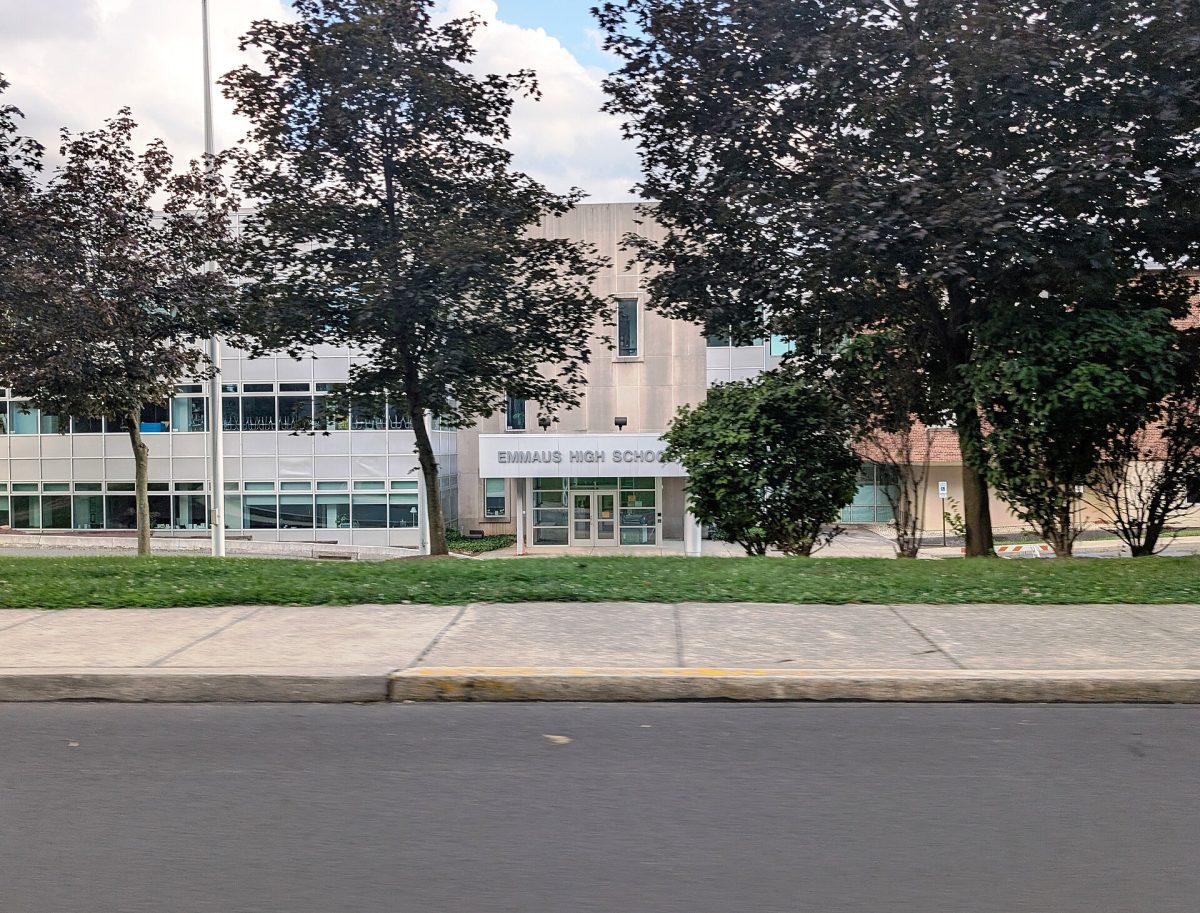
From students writing graffiti tags to committing TikTok vandalism trends, the culture of restroom disobedience in high schools has significantly changed over the years. However, one common factor remains: the lack of regard for rules and repercussions — and Emmaus High School is no exception to this. Hall monitor Olimpia Pellegrino, believes that there is an increase in vandalism occurrences in EHS.
“Every year it changes. This year has been, I believe, the worse [so far with vandalism],” Pellegrino said.
Head custodian, Daniel Marsteller, shares his thoughts on the vandalism occurring within the school’s bathrooms. “The biggest issue is the vandalism, and that goes in spurts. It could be two months where it’s a problem all the time and then nothing’s happening,” Marsteller said.
When comparing the number of occurrences of graffiti in the bathrooms from Oct. to Nov., Marsteller notes a decrease in occurrences.
“In October, it was probably everyday, or multiple bathrooms everyday. I maybe got three [acts of graffiti vandalism] in the month of November, so I would say that decreased,” Marsteller said.
Vandalism comes in many forms, and one that has been brought to many’s attention in the past few years is the “devious licks” trend. Created on TikTok in late 2021, the trend
consisted of students ripping school property off of the walls in their school’s restroom.
Oftentimes, the trend consisted of ripping a sink, a toilet, a soap dispenser, a paper towel dispenser, or a hand dryer from the wall, which left restroom unusable for other students. The repercussions of this trend go deeper than the school’s inconvenience with having to replace the now-missing property; stalls become unusable, restrooms get closed, and education gets disrupted.
Despite the trend being over four years old, it persists in being an issue that schools have to deal with.
“I think taking stuff off the walls and ripping property [from the school], that’s getting worse,” Pellegrino said.
Graffiti in restrooms has not only existed for decades, but has formed its own culture, as graffiti vandals (referred to as taggers) often write an initial, a name, or a code name to identify their graffiti work (referred to as a tag). Some common restroom graffiti acts consist of derogatory words, vulgar statements, and inappropriate illustrations. It even has its own name — latrinalia — a term coined just shy of six decades ago by American Folklorist Alan Dundes in his 1966 essay, titled, “Here I Sit — A Study of American Latrinalia,” — distinguishes itself from the term graffiti according to Dundes. The term defines any graffiti that resides in a restroom, and can be separated from normal graffiti as restroom graffiti is known to have a more inappropriate presence.
With the issue of restroom graffiti being prominent enough 60 years ago for Dundes to create a word for it, it may begin to raise concerns that the issue of bathroom vandalism has continued for over half a century, and has even evolved into new forms, such as the flushing of vapes.
Flushing vapes, despite being a new issue for high school restrooms, has heavily burdened janitors and plumbers, as they often result in the clogging of pipes, causing major issues.
The flushing of vapes is just the tip of the iceberg as far as vape issues go; the issue of students vaping in bathrooms has been in existence since vapes were first created.
Since her induction as principal of EHS in the 2022-23 school year, Principal Beth Guarriello has consistently made the issue of vaping in school a priority.
“It’s definitely better than when I first got here. When [I] first got here, it was like a cloud of smoke,” Principal Guarriello said. “With the addition of the vape detectors, which was huge [in efforts to stop the vaping issues in EHS], it’s not nearly as bad.”
Despite the addition of vape detectors, students continue to find new ways to hide vaping in school. Principal Guarriello is concerned for students who frequently vape, as the highly addictive drug, nicotine can lead to both health problems and mental health problems.
“Unfortunately, I think there’s a group of students who vape regularly, and that it’s an addiction [for them],” Principal Guarriello said.
Additionally, the issue of flooding toilets goes further than flushing vapes, as deliberately flooding toilets is another prominent form of vandalism. From flushing apples to school lunches, to flushing entire folders of homework, students seem to flush whatever items they can find with the sole intention of clogging the toilets and flooding the restrooms. Marsteller began keeping track of the amount of vapes he has extracted from the toilet pipes at the beginning of last year, as well as which bathrooms he finds them in.
“Most of the time it’s two [vapes], but we had an issue maybe two weeks ago, there [were] five [vapes in the toilet],” Marsteller said.
A frequent occurrence in EHS as a result of any kind of vandalism is the closing of bathrooms. Whether a toilet is intentionally clogged or a vandal writes a plethora of insults on a wall, janitors and plumbers must close the restrooms in order to repair and leave the stalls in usable conditions for other students. Junior Jaslene McNeil believes the school should take further action on preventing future occurrences of vandalism instead of hiding the reoccurring issue.
“I don’t think [closing the restrooms] is changing anything,” McNeil said. “If the problem is still happening and you keep closing the bathrooms, it’s going to keep happening. It’s not going to stop.”
With several forms of vandalism frequently occurring at EHS, Principal Guarriello hopes students will remember the importance of keeping the bathrooms as well as the rest of the school clean.
“This is our school, this is our home, and we have to respect that, and respect each other,” Principal Guarriello said.
“And any vandalism or destruction that happens in the bathroom, it’s not the environment we want for our school.”
While an absolute solution to this issue has yet to be found, Marsteller has some ideas on how to deter students from flushing items, such as vapes, in the toilets.
“If they would catch somebody doing it, [the students] could come along with me and take a toilet off, one that really didn’t flush, and we’ll get a good smell,” Marsteller said. “And chances are, it’s not going to happen [again].”